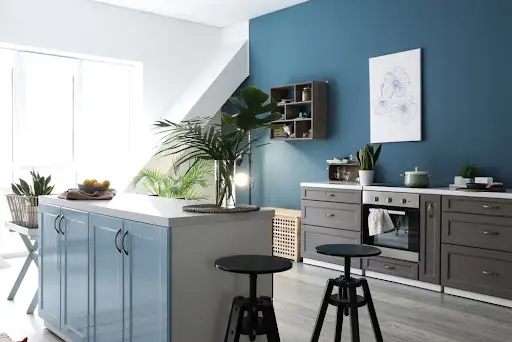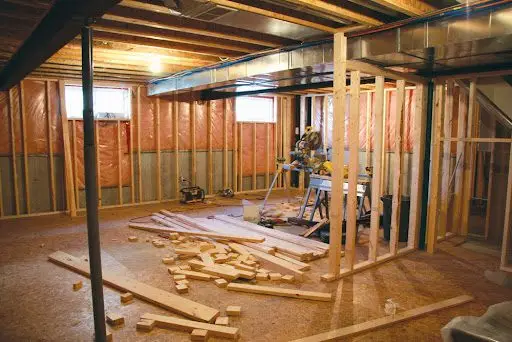
Your kitchen should be the heart of your home—not a source of daily frustration.
Maybe your cabinets are showing their age, your countertops have seen better days, or your layout just doesn’t work for how your family actually lives. Whatever’s bringing you here, you’re probably wondering what it really takes to transform your kitchen into the space you’ve been dreaming about.
Here’s the truth: understanding your kitchen remodel cost in Lower Makefield isn’t just about getting a number…it’s about knowing what drives that investment and how to make smart decisions that align with your vision and budget.
Whether you’re planning a straightforward refresh or a complete gut renovation, the choices you make will impact both your daily life and your home’s value for years to come.
At Gemini Home Remodeling, we’ve transformed dozens of kitchens throughout Bucks County, and we know that every homeowner’s situation is unique.
That’s why we’ve put together this comprehensive guide—to give you the real story on kitchen remodeling costs in Lower Makefield, what factors influence your final investment, and how to plan a project that delivers exactly what you need without breaking the bank.
Let’s dive into what you can actually expect when you’re ready to create the kitchen you deserve.
Lower Makefield Kitchen Remodel Cost Ranges
The investment required for your kitchen transformation depends entirely on the scope of work, materials you select, and the level of customization you’re after. Understanding these ranges helps you set realistic expectations and start planning with confidence.
Let’s break down what each tier typically includes and what kind of transformation you can expect at different investment levels.
Essential Kitchen Remodels ($15,000–$25,000)
An essential remodel focuses on refreshing the fundamentals without changing your kitchen’s footprint or layout. This tier works beautifully if your existing layout is functional but your finishes need updating.
You might refinish or reface existing cabinets rather than replace them entirely, install laminate or basic granite countertops, and upgrade to new mid-grade appliances that offer solid performance without luxury features.
Flooring updates typically include vinyl plank or standard tile, and you’ll refresh lighting fixtures and hardware to modernize the space.
This approach delivers a noticeably improved kitchen that feels cleaner, brighter, and more current—all while keeping costs manageable. It’s ideal for homeowners who need to update dated finishes or prepare a home for sale without overextending their budget.
Mid-Range Kitchen Remodels ($25,000–$40,000)
Mid-range remodels give you significantly more flexibility to customize and upgrade. At this level, you’re likely replacing cabinets entirely with semi-custom options that offer better construction and more design choices.
Countertop selections expand to include quartz, higher-grade granite, or even marble in smaller applications.
You can incorporate moderate layout changes—perhaps removing a short wall section to improve flow or reconfiguring your work triangle for better functionality.
Appliance packages typically include stainless steel models with desirable features, and you’ll have room in the budget for elements like a tile backsplash, upgraded lighting packages with under-cabinet illumination, and quality hardware that adds character.
Lower Makefield kitchen remodeling prices in this range create a kitchen that feels truly customized to your lifestyle while balancing investment with impact.
High-End Kitchen Remodels ($40,000–$50,000+)
High-end remodels represent comprehensive transformations where virtually everything changes.
You’re working with custom cabinetry built to your exact specifications, premium countertop materials like exotic stone or designer quartz, and professional-grade appliances that serious home cooks appreciate.
This tier often includes significant structural work—removing walls to create open-concept spaces, adding windows for natural light, or expanding the kitchen’s footprint entirely. You’ll incorporate custom storage solutions, high-end tile or hardwood flooring, statement lighting fixtures, and finishing touches like crown molding and furniture-quality details.
The result is a showpiece kitchen that elevates your entire home and provides an unmatched cooking and entertaining experience for decades to come.
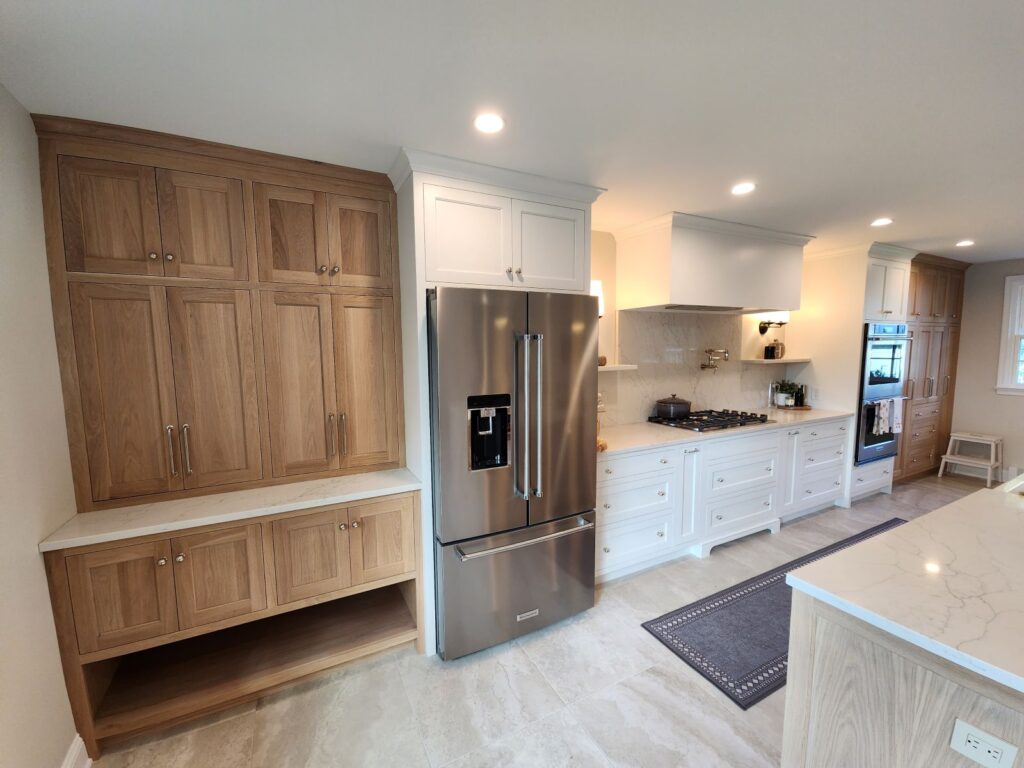
Factors That Affect Kitchen Renovation Cost in Lower Makefield
Your final investment isn’t determined by a single factor—it’s shaped by dozens of decisions you’ll make throughout the planning and construction process. Here are the key elements that influence kitchen renovation cost in Lower Makefield.
Kitchen Size and Layout Changes
Square footage directly impacts material quantities and labor hours. A compact 100-square-foot galley kitchen naturally requires less flooring, fewer cabinets, and less countertop material than a sprawling 250-square-foot space. But size alone doesn’t tell the whole story.
Layout changes amplify costs significantly. If you’re simply updating finishes within your existing footprint, you’ll avoid the expenses associated with moving plumbing lines, rerouting electrical, and potentially relocating gas connections.
However, when you decide to relocate your sink across the room, add an island with a cooktop, or remove a wall to create an open floor plan, you’re adding structural work, permit requirements, and specialized trade labor that can add thousands to your project budget.
Cabinet Selection and Customization
Cabinetry typically represents the largest single expense in any kitchen remodel, often consuming 30-40% of your total budget. Stock cabinets from big-box retailers offer the most economical option with limited sizes and finishes.
Semi-custom cabinets provide more flexibility in dimensions and styling while maintaining reasonable costs. Full custom cabinetry—built specifically for your space with your chosen wood species, door styles, and internal accessories—delivers exactly what you envision at a premium price point.
Beyond the cabinet boxes themselves, your choices in hardware, organizational inserts, specialty storage solutions, and finishing details like crown molding or furniture feet all contribute to the final cost. A simple shaker-style cabinet with basic hardware costs considerably less than the same cabinet with soft-close hinges, pull-out organizers, and designer handles.
Countertop Materials and Square Footage
Countertop pricing varies wildly based on material selection and the linear footage you’re covering. Laminate remains the most budget-friendly option, while materials like quartz, granite, marble, and quartzite each carry different price points based on rarity, fabrication complexity, and installation requirements.
Edge profiles, backsplash height, and details like undermount sinks versus drop-in models also affect costs. A standard eased edge on a basic granite slab costs less than an ogee or waterfall edge on exotic stone.
If you’re incorporating an island, breakfast bar, or extended countertop seating, those additional square feet add up quickly in both materials and fabrication labor.
Appliance Packages and Special Features
Appliance selection spans an enormous range—from builder-grade models that get the job done to professional-series equipment that transforms how you cook.
A basic refrigerator, range, dishwasher, and microwave package might cost $2,500-$4,000, while high-end versions of the same appliances can easily exceed $15,000.
Special features like built-in coffee systems, wine refrigerators, warming drawers, or commercial-grade range hoods add functionality and cost. Even within standard appliance categories, choices matter: a standard-depth refrigerator costs less than a counter-depth model, and a basic range costs considerably less than a dual-fuel model with convection capabilities.
Structural and Systems Work
What’s hidden behind your walls often determines whether your project stays on budget or encounters unexpected expenses.
Older Lower Makefield homes may require electrical panel upgrades to handle modern appliance loads, especially if you’re adding high-powered equipment. Plumbing updates might be necessary to meet current code requirements or accommodate new fixture locations.
If your remodel reveals outdated wiring, inadequate insulation, or structural issues that need addressing, those discoveries add both time and money to your project.
HVAC considerations—like adding or relocating vents to maintain proper airflow in a reconfigured space—also impact your bottom line. Smart planning includes setting aside contingency funds for these possibilities.
Planning Your Kitchen Remodel Budget in Lower Makefield
Creating a realistic budget isn’t just about knowing what things cost—it’s about prioritizing what matters most to you and building financial cushion for the unexpected.
A well-planned kitchen remodel budget in Lower Makefield sets you up for a smoother process and better results. Here’s how to approach the planning stage strategically.
Determine Your Maximum Investment
Start by establishing what you can genuinely afford, not just what you hope to spend. Look at your available cash, financing options, and how long you plan to stay in your home.
If you’re remodeling a forever home, you might justify a higher investment that perfectly suits your needs. If you’re planning to sell within a few years, consider how much value your improvements will add to your home’s resale price.
Talk with a financial advisor or mortgage professional if you’re considering financing options like home equity loans or lines of credit. Understanding your true budget ceiling—including interest costs if you’re borrowing—prevents you from overextending and helps you make clear-eyed decisions throughout the project.
Allocate Funds Across Project Elements
Once you know your total budget, break it down by category. A general guideline allocates roughly 30-35% to cabinetry, 20-25% to labor and installation, 10-15% to appliances, 10-15% to countertops, and the remainder to flooring, lighting, fixtures, and finishing touches.
These percentages shift based on your priorities—if you’re passionate about cooking and want premium appliances, you might reduce cabinet costs to allocate more to that Viking range.
Write down your must-haves versus nice-to-haves. Maybe you absolutely need more storage and better workflow, but heated floors would be a bonus if the budget allows. This clarity helps you make trade-offs without regret when you’re facing decisions during the project.
Build in a Contingency Reserve
Every experienced remodeler will tell you the same thing: set aside 15-20% of your budget for unexpected expenses.
You might discover water damage behind old cabinets, encounter outdated wiring that needs replacement, or decide mid-project that you want to upgrade one element after seeing it in person.
This contingency isn’t pessimism—it’s realism. Having this cushion means surprises become minor adjustments rather than project-derailing crises. If you don’t need it, great—you’ve stayed under budget. But planning for it from the start protects both your finances and your peace of mind.
Get Multiple Detailed Quotes
Don’t settle for rough estimates or single bids. Reach out to at least three qualified remodeling contractors and request itemized proposals that break down costs by category. This transparency helps you understand where your money goes and makes it easier to compare options fairly.
Look beyond the bottom line—evaluate what each contractor includes, their timeline, their approach to communication, and their track record in Lower Makefield.
The lowest bid isn’t always the best value if it means compromising on quality, cutting corners, or working with someone who doesn’t return calls. A detailed quote from a reputable contractor gives you confidence that your budget reflects reality, not wishful thinking.
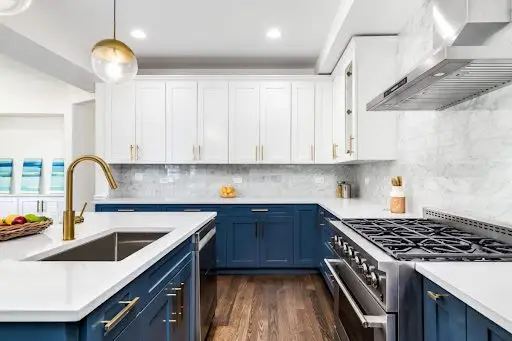
Smart Ways to Save on Your Lower Makefield Kitchen Remodel
You don’t need to sacrifice quality or settle for a kitchen you don’t love to keep your project financially sensible. Strategic choices throughout the planning and execution phases can significantly reduce your Lower Makefield kitchen remodel cost without compromising the end result.
Here’s how to make your budget work harder.
Keep Your Existing Layout
One of the most effective cost-saving strategies is working within your current kitchen footprint. When you avoid moving major plumbing lines, gas connections, and electrical panels, you eliminate entire categories of expensive work.
Relocating a sink to the opposite wall might seem like a small change, but it requires rerouting drain lines, water supply, and potentially venting—costs that add up quickly.
Similarly, keeping your appliances in their current locations saves on the electrical and gas work needed to create new connections. You can still achieve a dramatically different look and improved functionality by updating finishes, replacing cabinets, and improving storage within your existing layout.
Sometimes the smartest design solutions work with what you have rather than fighting against it.
Mix High and Low Investment Elements
Strategic splurging means choosing where to invest and where to save.
You might select stunning quartz countertops but pair them with semi-custom cabinets instead of full custom. Or invest in professional-grade cooking appliances while choosing standard refrigeration and dishwashers that perform well at lower price points.
Consider spending more on elements you touch and use daily—cabinet hardware, faucets, lighting fixtures—while economizing on items that deliver less tangible value. A beautiful tile backsplash creates visual impact for a fraction of what you’d spend extending premium countertops up the wall.
These thoughtful combinations let you create a high-end look without a completely high-end budget.
Tackle Appropriate DIY Tasks
If you’re handy and honest about your skill level, taking on certain tasks yourself can reduce labor costs substantially.
Demolition work, painting, and installing hardware are well within reach for many homeowners. You might handle the cosmetic finishing while leaving structural, plumbing, and electrical work to licensed professionals.
Know your limits, though.
Improperly installed tile or poorly executed electrical work creates safety hazards and often costs more to fix than hiring a professional would have cost initially.
The key is understanding which tasks save meaningful money without introducing risk or requiring skills you don’t possess. A good contractor can often structure projects to accommodate your DIY contributions where they make sense.
Choose Materials Wisely
Material selection offers tremendous opportunities for savings without obvious compromises.
Porcelain tile that mimics natural stone delivers similar aesthetics at a fraction of marble’s cost.
Quartz countertops provide the look of natural stone with better durability and lower maintenance requirements than some pricier options.
For cabinetry, stock or semi-custom options from quality manufacturers often provide excellent construction and attractive finishes without custom pricing. You can add personality through your choices in paint colors, hardware, and decorative elements rather than paying for custom millwork.
Similarly, luxury vinyl plank flooring has evolved to convincingly replicate hardwood while offering better water resistance and easier installation—both factors that reduce cost.
Time Your Project Strategically
Contractors and suppliers sometimes offer better pricing during slower seasons, typically late fall through early spring in our area. While this won’t always align with your timeline, if you have flexibility, scheduling during off-peak periods might yield better rates or more negotiating room.
Additionally, being flexible with your timeline and allowing contractors to work your project around their schedule—rather than demanding immediate starts—can sometimes result in preferential pricing.
As a locally-owned-and-operated company, we appreciate clients who understand the rhythm of the remodeling business and can work collaboratively on scheduling that benefits everyone.
Lower Makefield Kitchen Remodeling Cost FAQs
You’ve got questions about kitchen remodeling costs, timelines, and what to expect during your project—and we’ve got answers. Here are the most common questions homeowners ask us when they’re planning their kitchen transformation.
How Long Does a Typical Kitchen Remodel Take in Lower Makefield?
Most kitchen remodels take 6-12 weeks from demolition to completion, though timelines vary based on project scope. Essential remodels with minimal layout changes might finish in 4-6 weeks, while comprehensive renovations involving structural work or custom cabinetry can extend to 12-16 weeks depending on material delivery and permit approvals.
What’s the Average Cost to Remodel a Kitchen in Lower Makefield?
Most homeowners invest between $25,000 and $45,000 for complete kitchen transformations. Your specific cost to remodel a kitchen in Lower Makefield depends on your kitchen’s size, materials selected, and layout changes. Smaller cosmetic updates start around $15,000, while luxury remodels with custom features can exceed $50,000.
Do I Need Permits for My Kitchen Remodel?
Any project involving electrical, plumbing, or structural changes requires permits from Lower Makefield Township. This includes relocating appliances, removing walls, or significant system updates. Cosmetic updates like replacing cabinets and countertops without moving connections typically don’t require permits. We handle all permit applications and inspections for you.
Will a Kitchen Remodel Increase My Home’s Value?
Kitchen remodels typically recoup 60-80% of their cost in added home value, making them one of the best remodeling investments. The exact return depends on your local market, the quality of work, and how well improvements align with neighborhood standards. Well-executed kitchen updates also help homes sell faster and attract more interested buyers.
What Impacts Kitchen Renovation Cost in Lower Makefield the Most?
Cabinetry typically represents your largest expense at 30-40% of total costs. Layout changes requiring plumbing and electrical relocation, appliance selections, countertop materials, and structural modifications all significantly impact kitchen renovation cost in Lower Makefield, PA. Custom features, high-end finishes, and your kitchen’s size also contribute substantially to final investment levels.
Can I Live in My Home During the Kitchen Remodel?
Yes, most homeowners stay in their homes during kitchen remodels, though expect some inconvenience. You’ll need a temporary kitchen setup in another room with essentials like a microwave, coffee maker, and cooler. Dust containment barriers minimize mess in other areas. The biggest challenges are noise during work hours and limited access to your kitchen space.
Ready to Find Out What Your Lower Kitchen Remodel Will Cost?
Ready to stop guessing and get real answers about your Lower Makefield kitchen remodel cost? We’ll come to your home, discuss your vision, assess your space, and provide a detailed quote that breaks down exactly where your investment goes.
No pressure, no obligation—just honest conversation about what’s possible for your kitchen and budget.
Call Gemini Home Remodeling today to schedule your free consultation and start creating the kitchen you deserve.